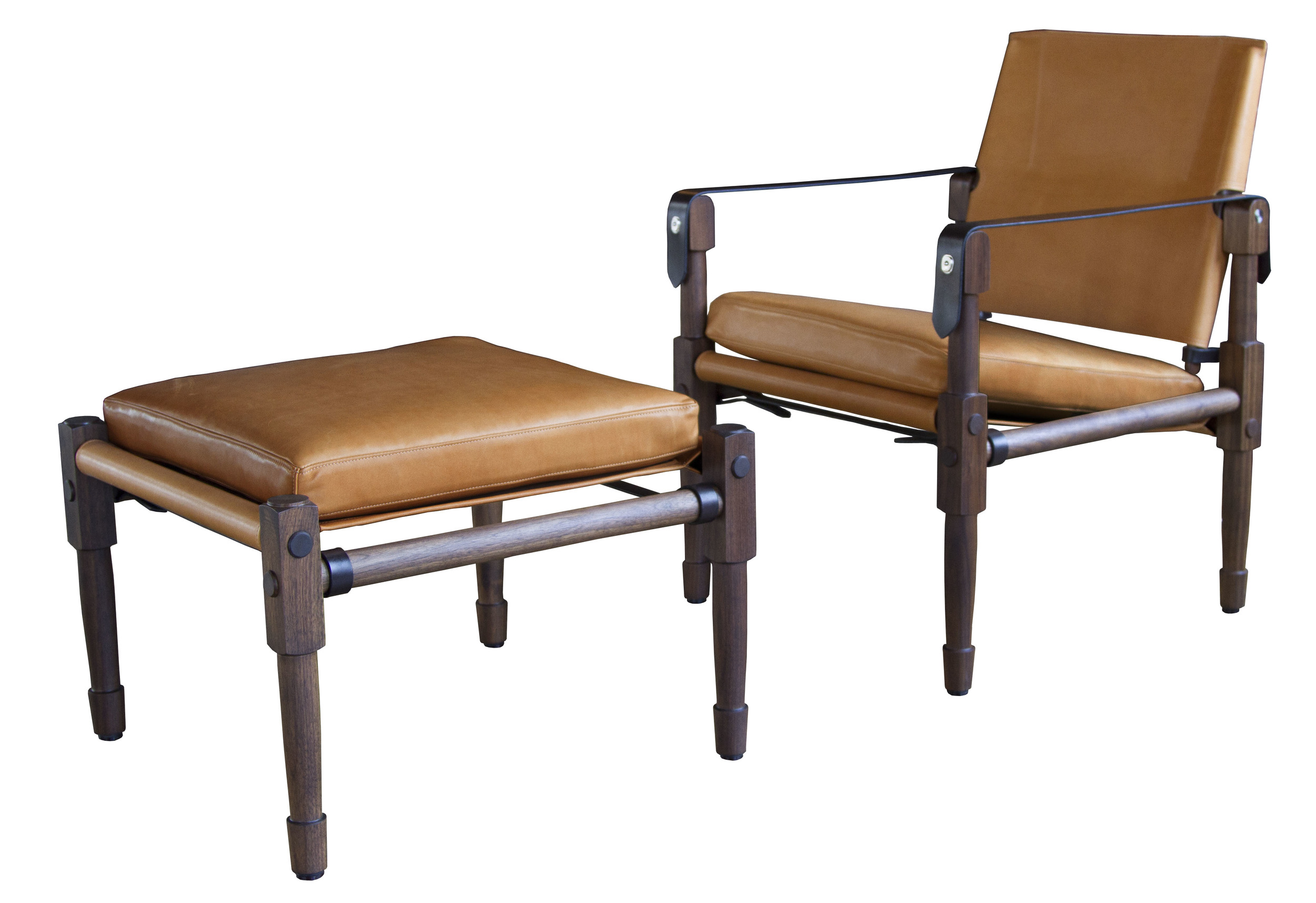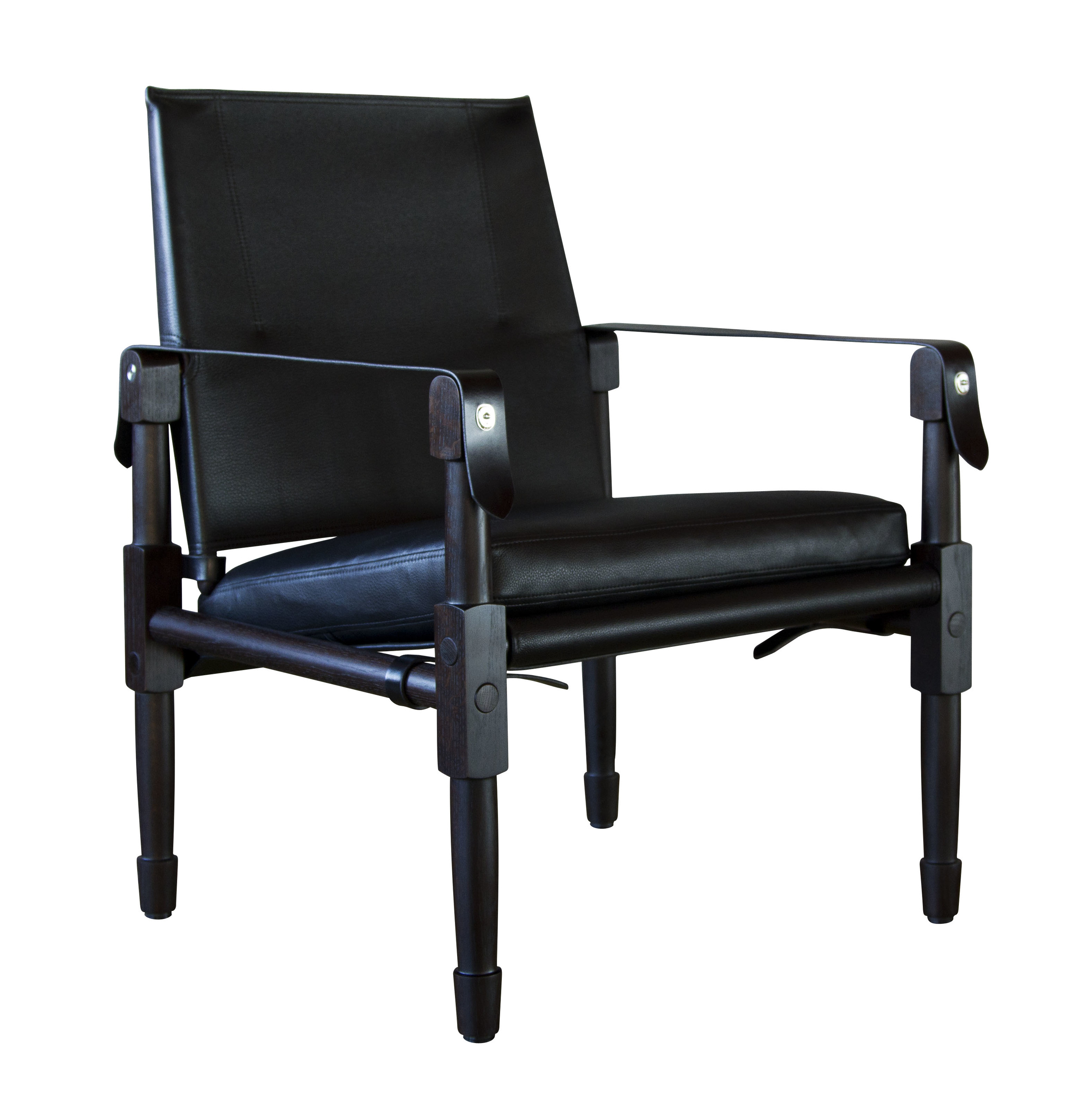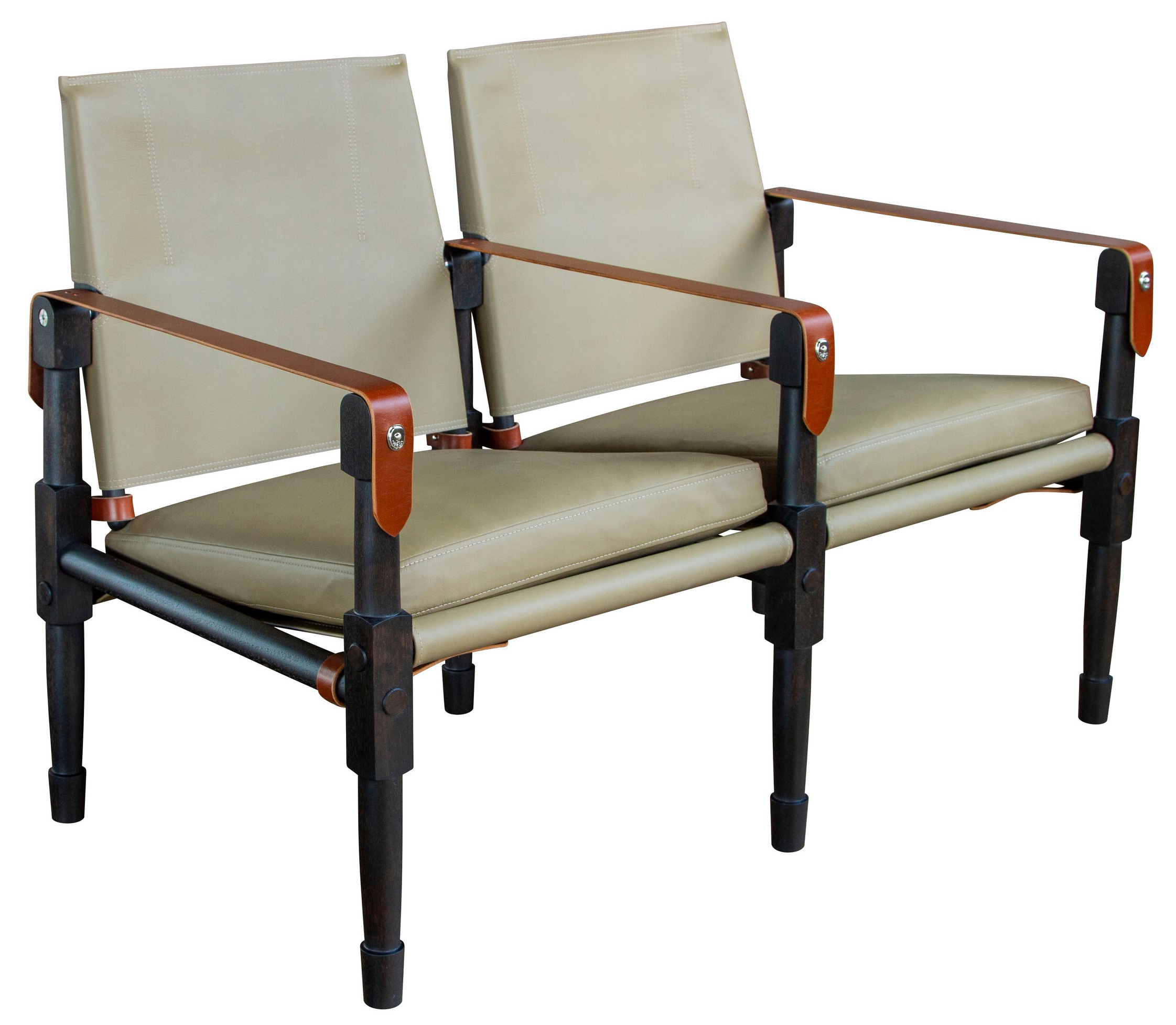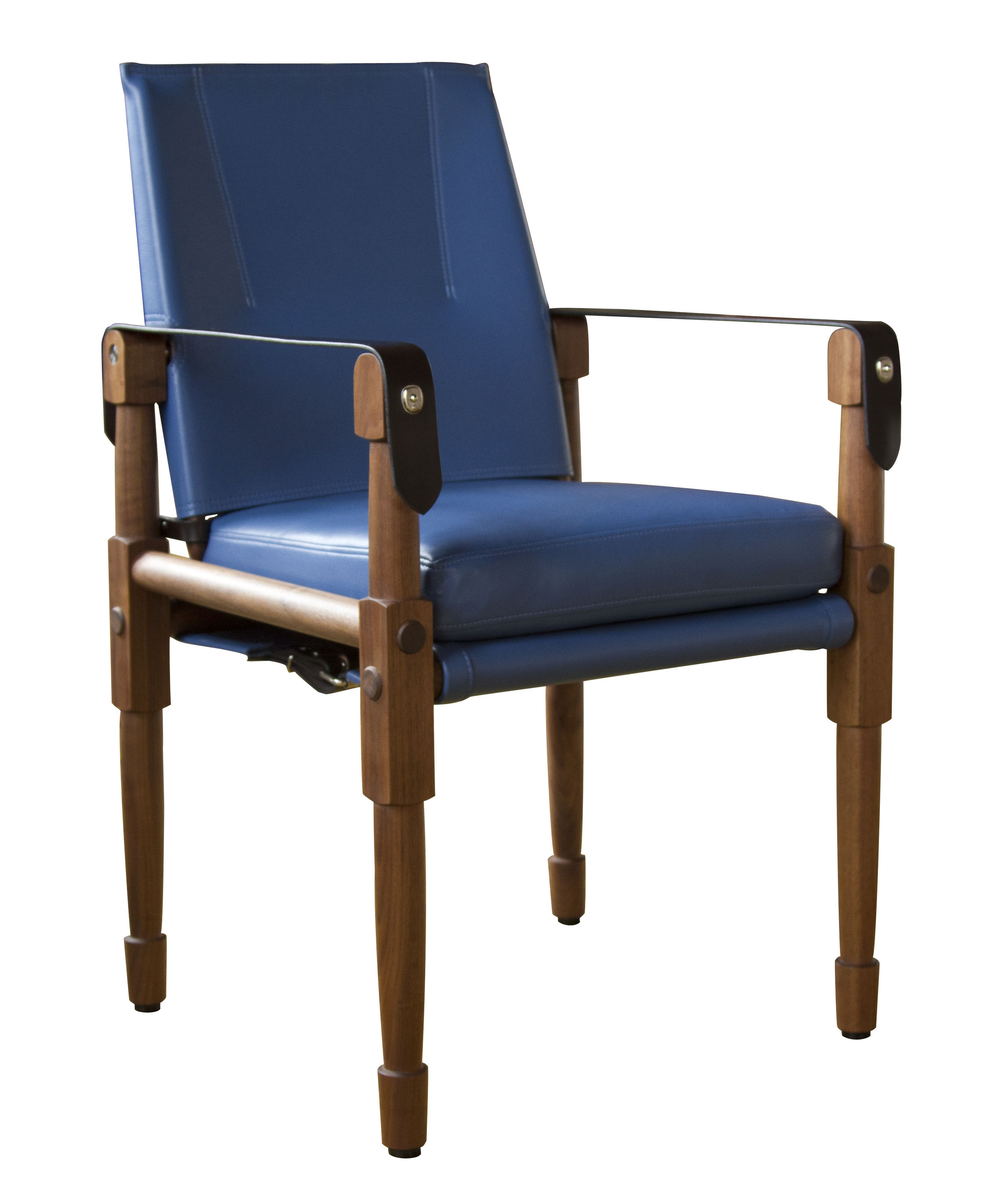
The Chatwin Collection
Named for a writer and wanderer who understood that the best journeys end at a table.
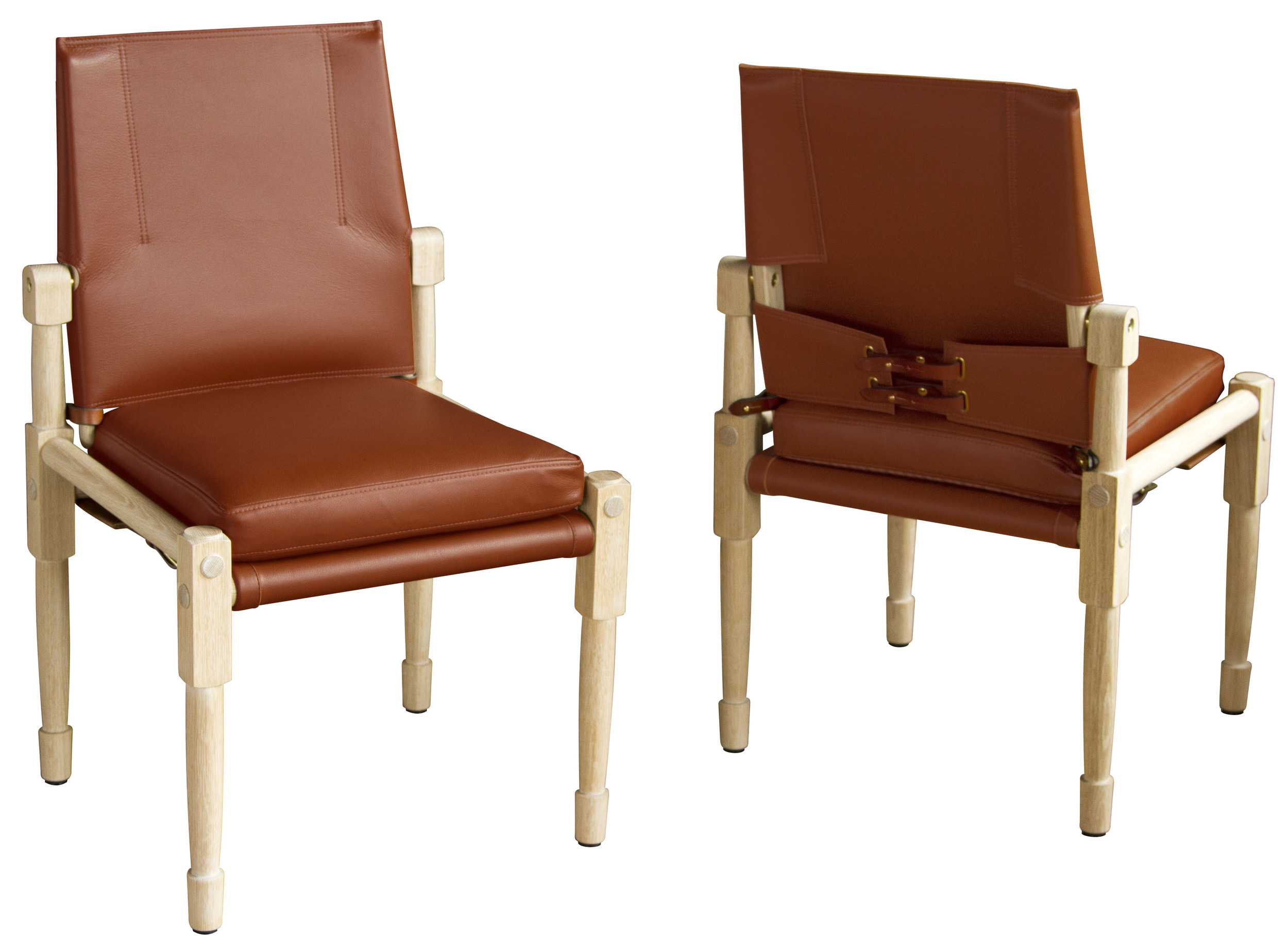
The Chatwin began as the Roorkhee chair in 1890s India — a chair Indian craftsmen made for the British that could be dismantled, carried, and reassembled wherever camp was pitched.
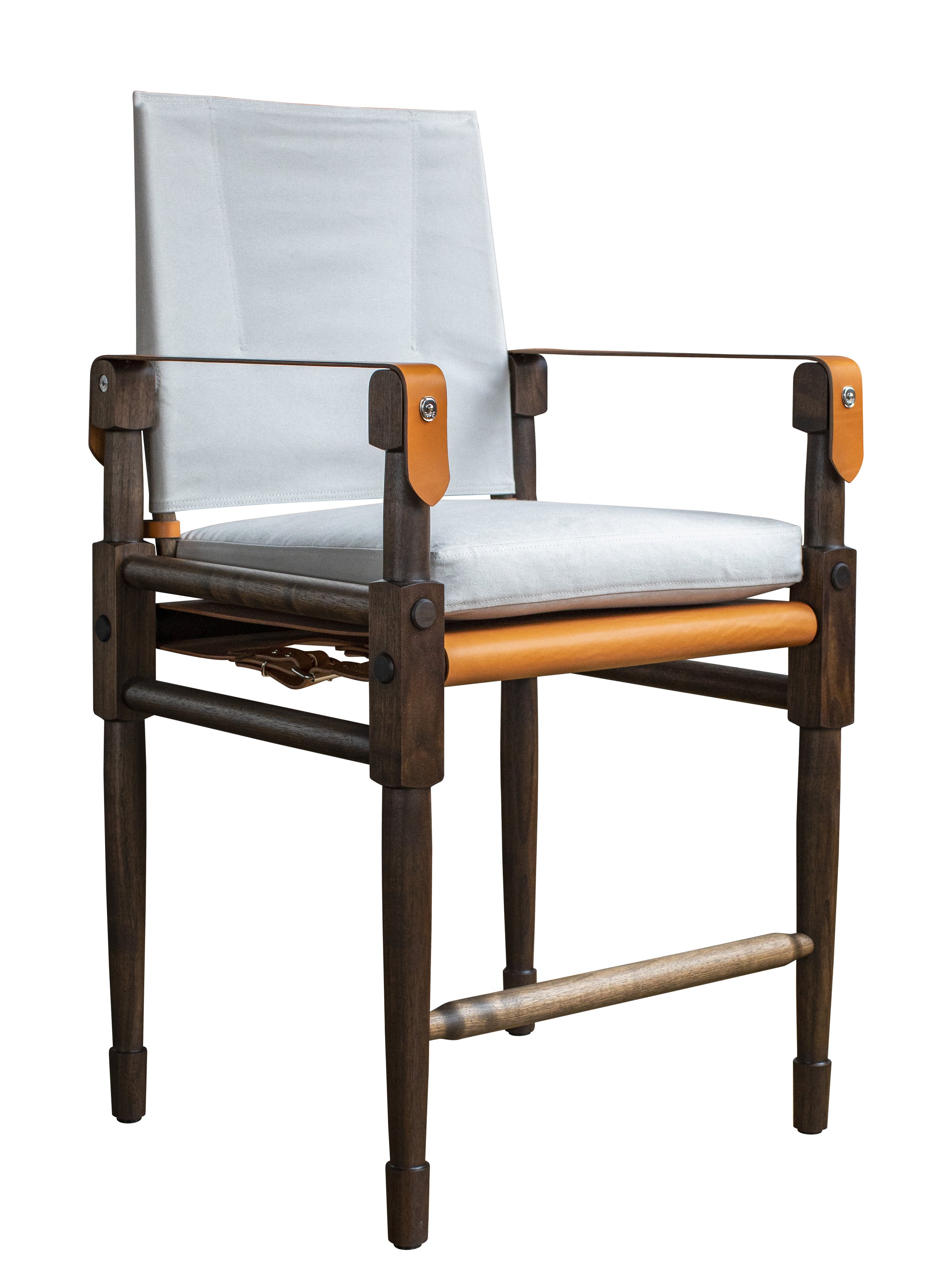
The Chatwin lounge chair came first, and has since been drawn twice more: a Grand two inches wider and taller, and a Grand 2 deeper still, for the sitter who intends to stay. Pull the lounge wide enough for two and it becomes the settee.
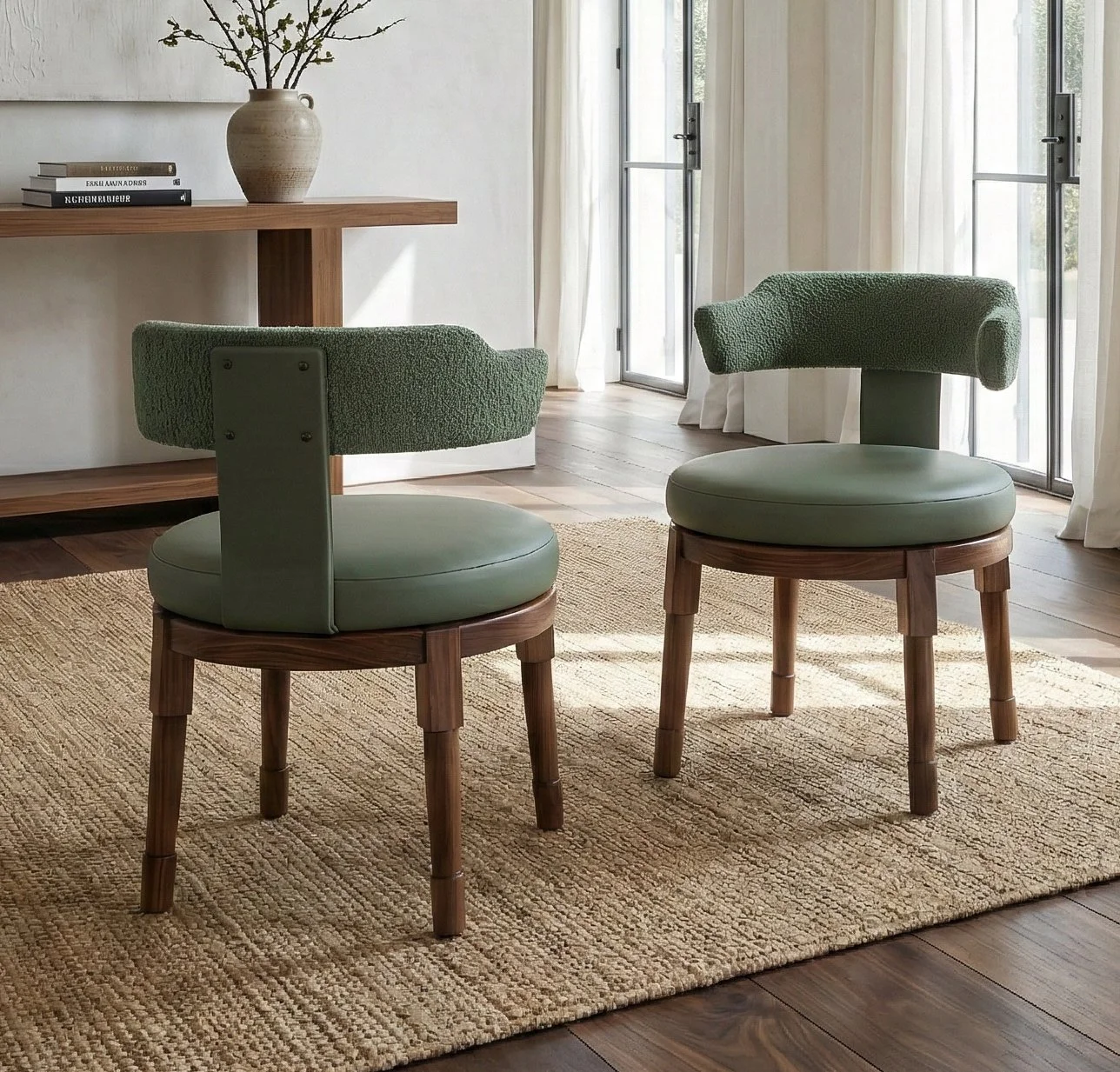
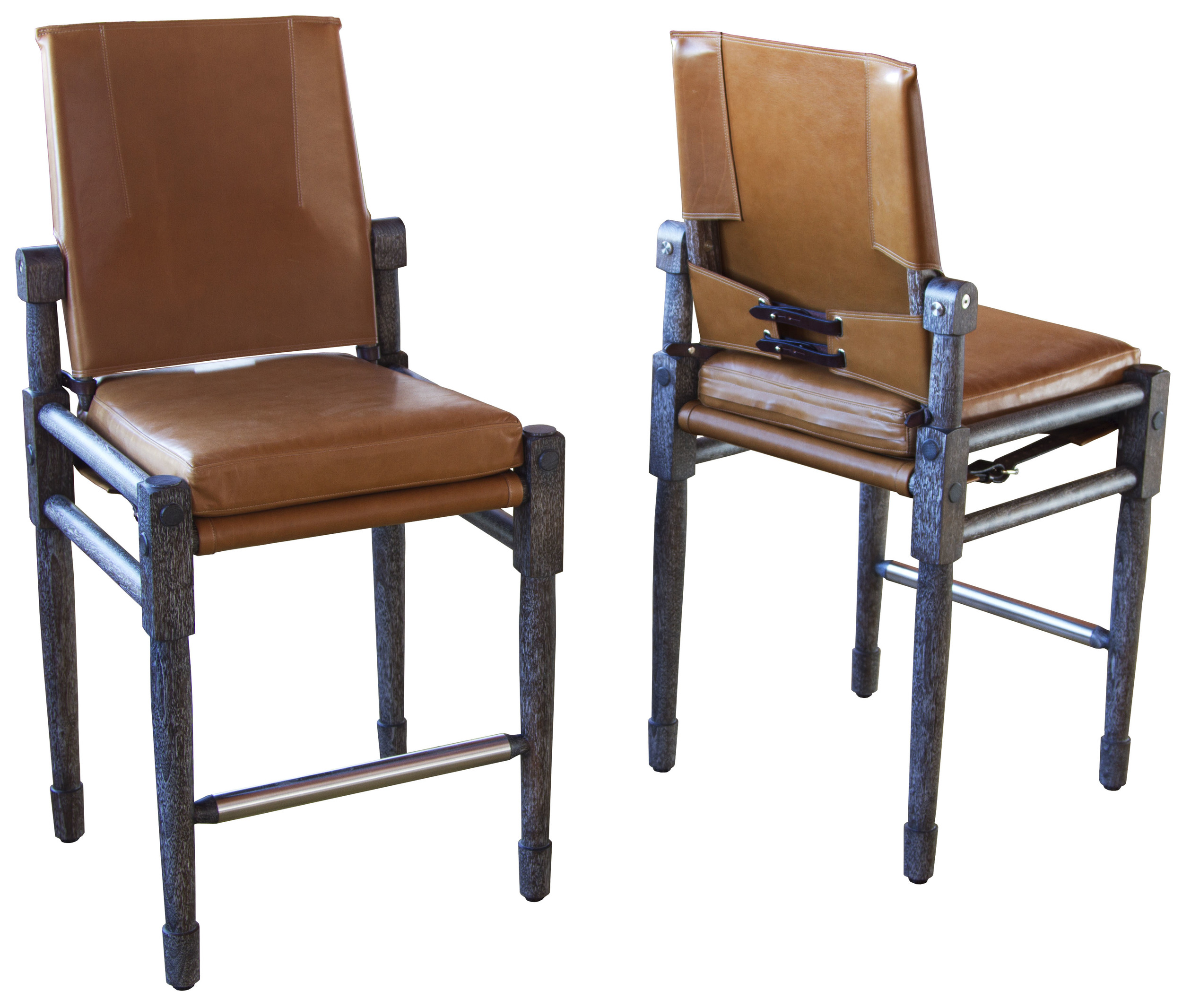
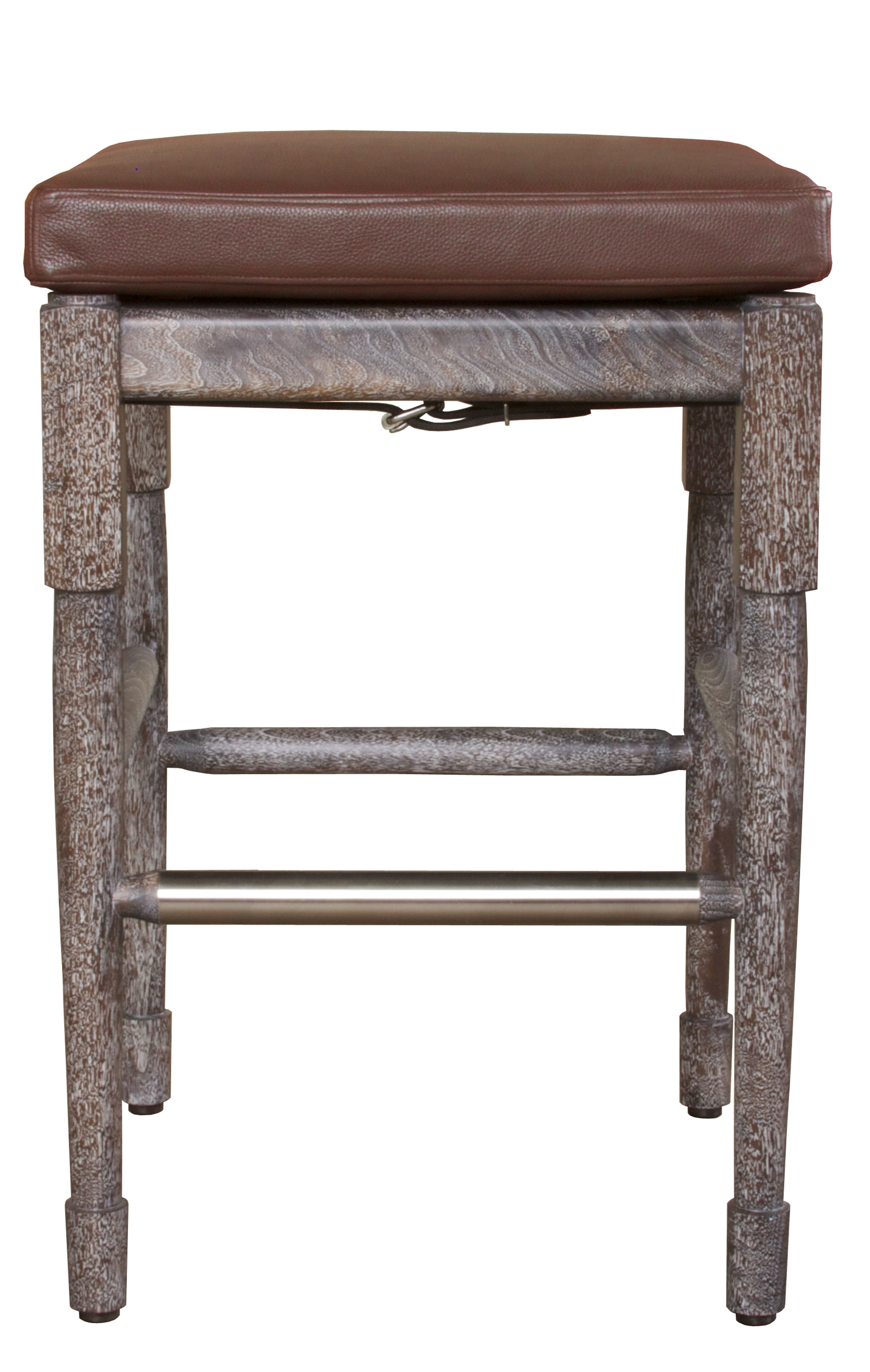
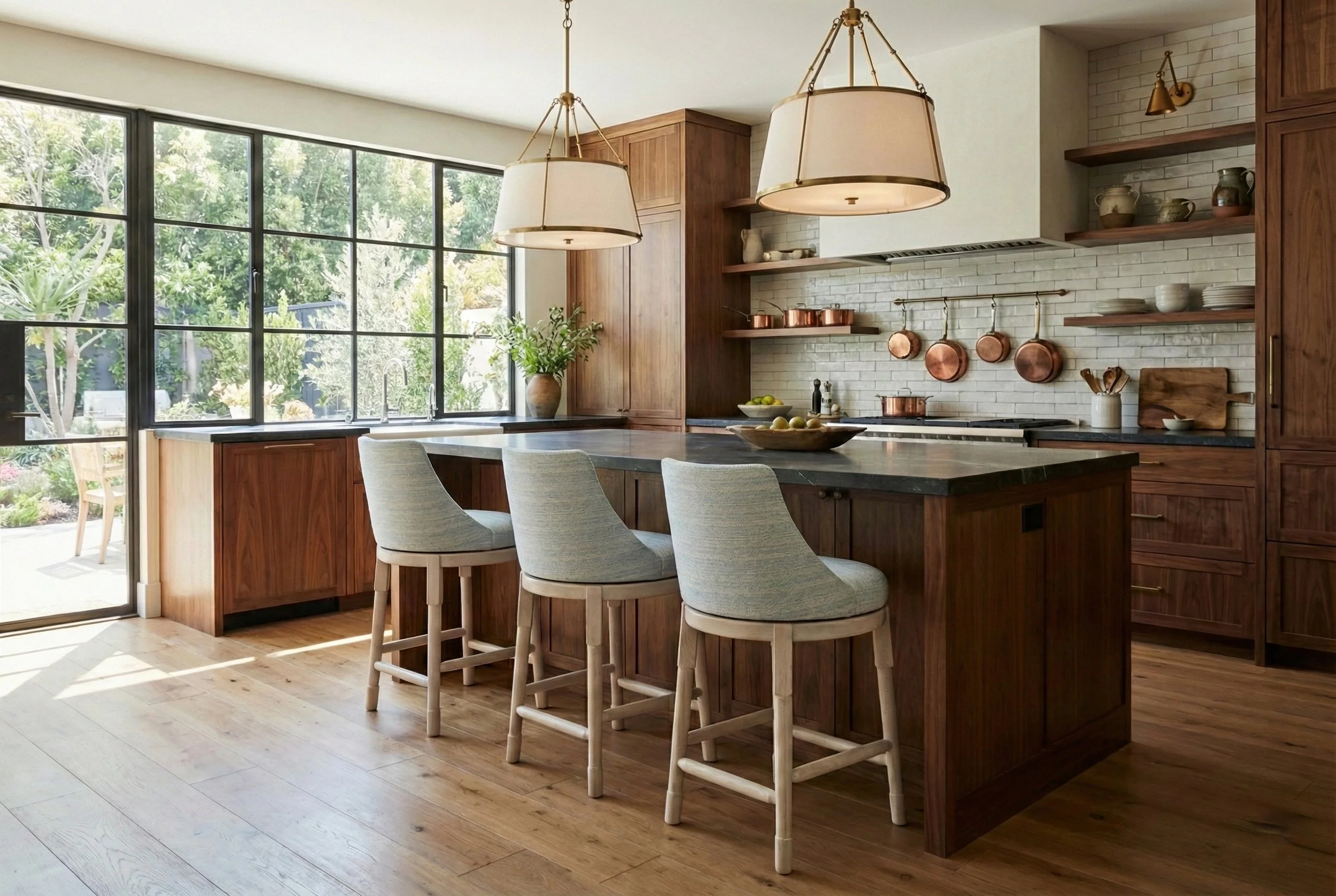
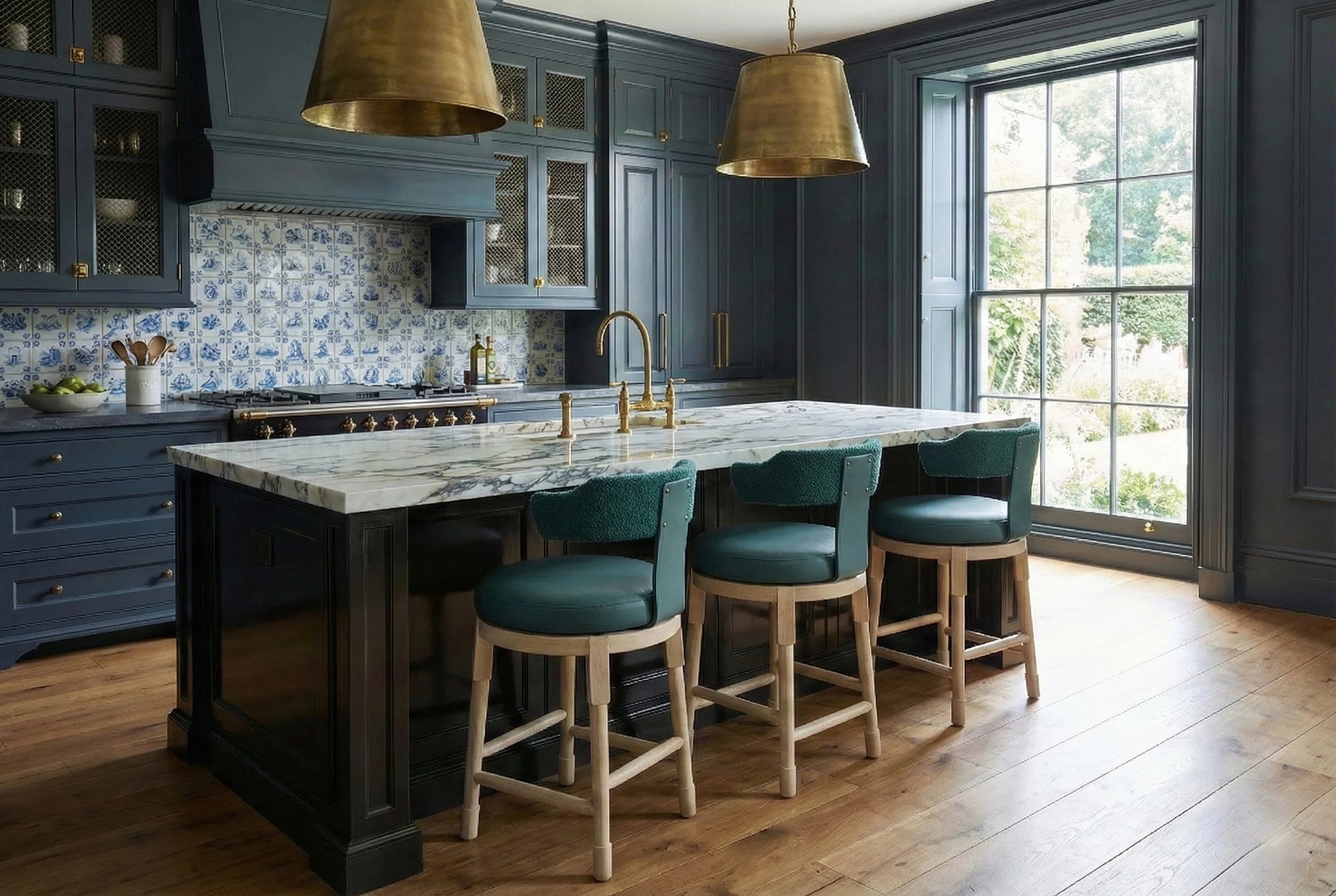
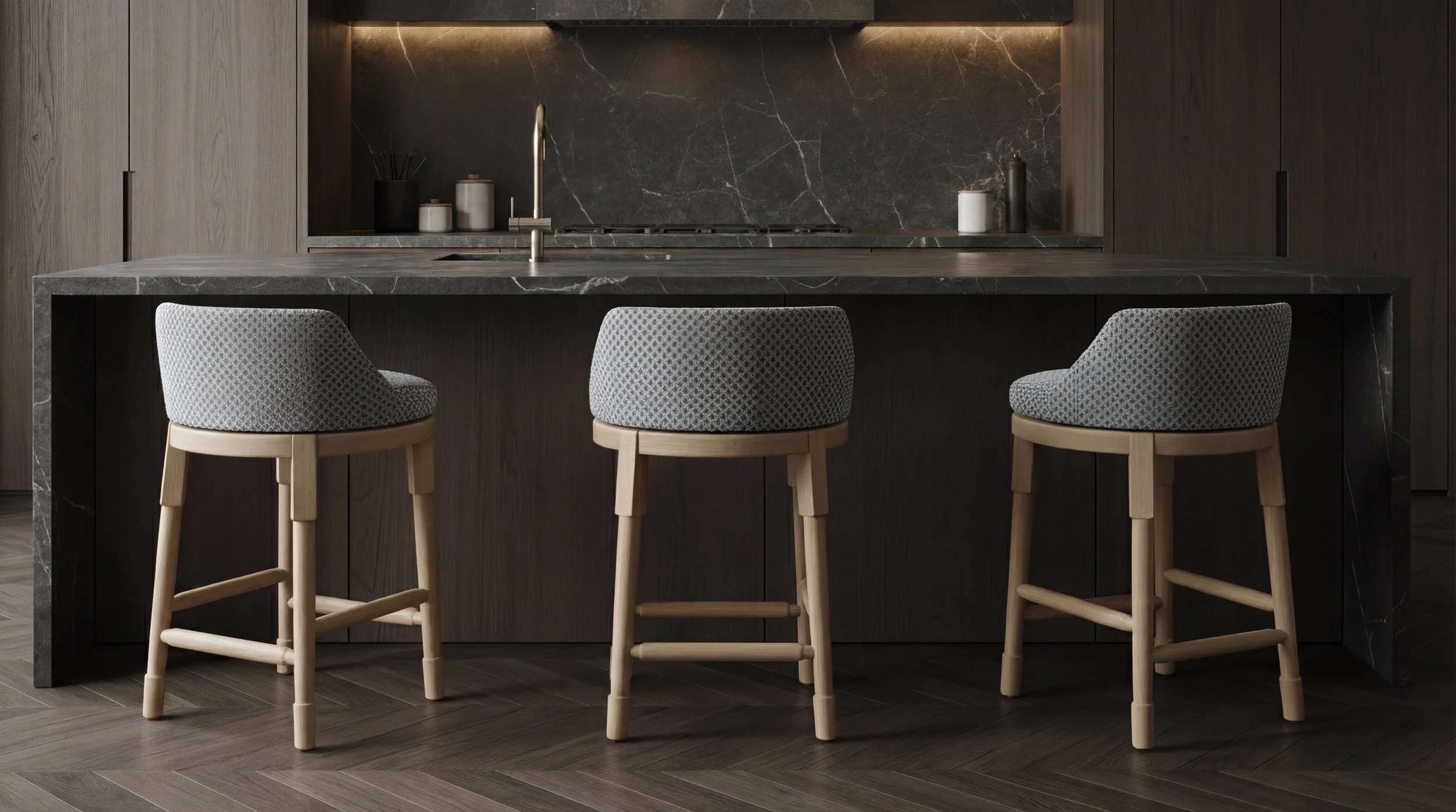
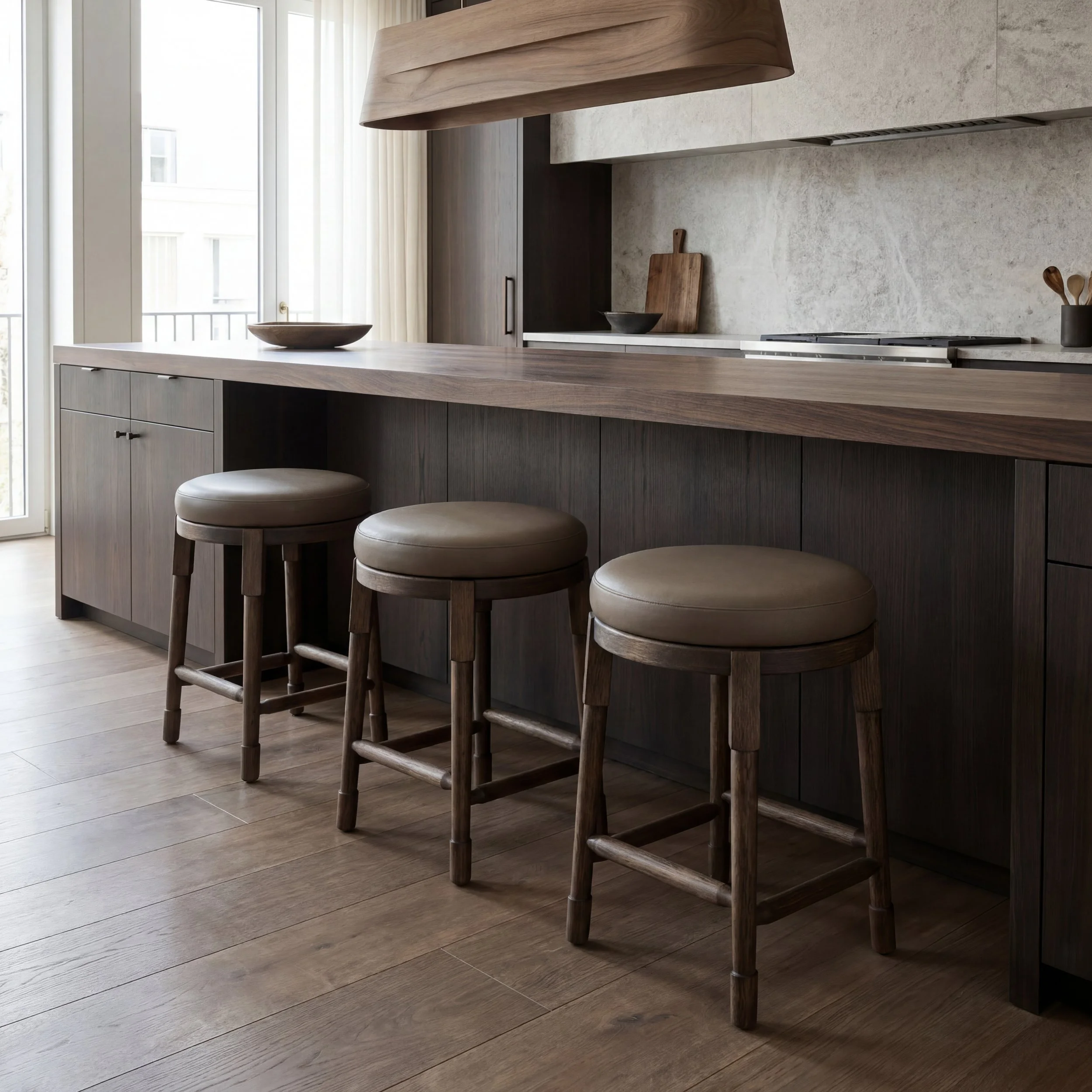
Bring the frame up to the table and it becomes the dining and desk chair, or its armless companion for the sides of a long run. Up further to counter and bar. Then the seat learned to turn — a departure from the campaign tradition, since nothing about a swivel mechanism belongs in a tent. The stools arrived in tallback, lowback, Finnback, and round, so that a sitter can turn to join the conversation behind them. What remains of the tradition here is only inferred: the turned leg, the leather, the look of a thing that once traveled.
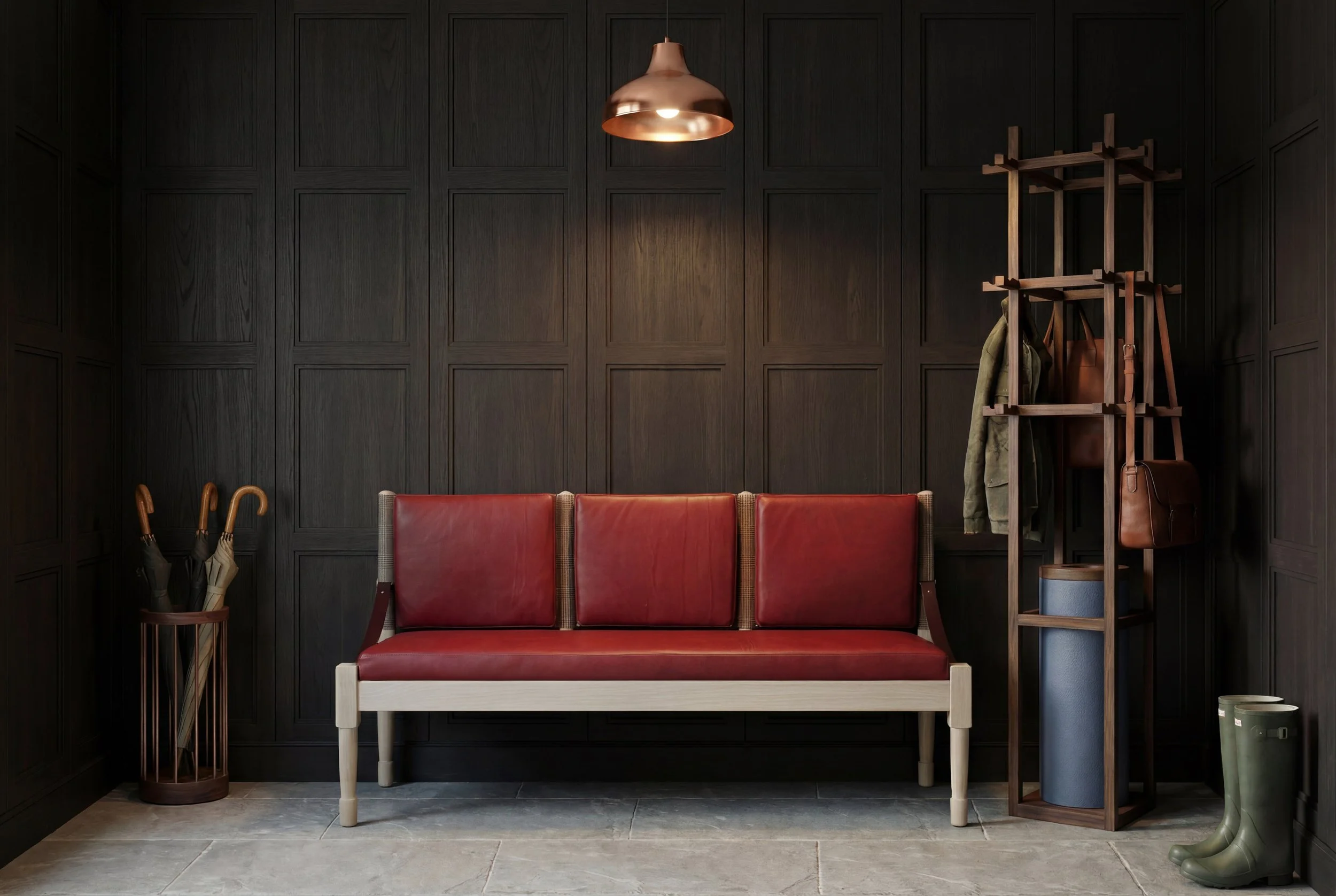
The bench belongs in a living room, a hallway, or someplace quiet.
The turned legs are the signature of the collection, and the fabric or leather at seat and back is the campaign idiom borrowed for its economy. The dining and lounge chairs are still made in the traditional manner and can be broken down. The bench and the counter and bar stools are fixed and braced — furniture with nowhere to go.
The suggestion remains of a piece that could, in another life, be packed away — and the sense, particular to this family, that it has been somewhere before arriving here.