The MacLaren Collection
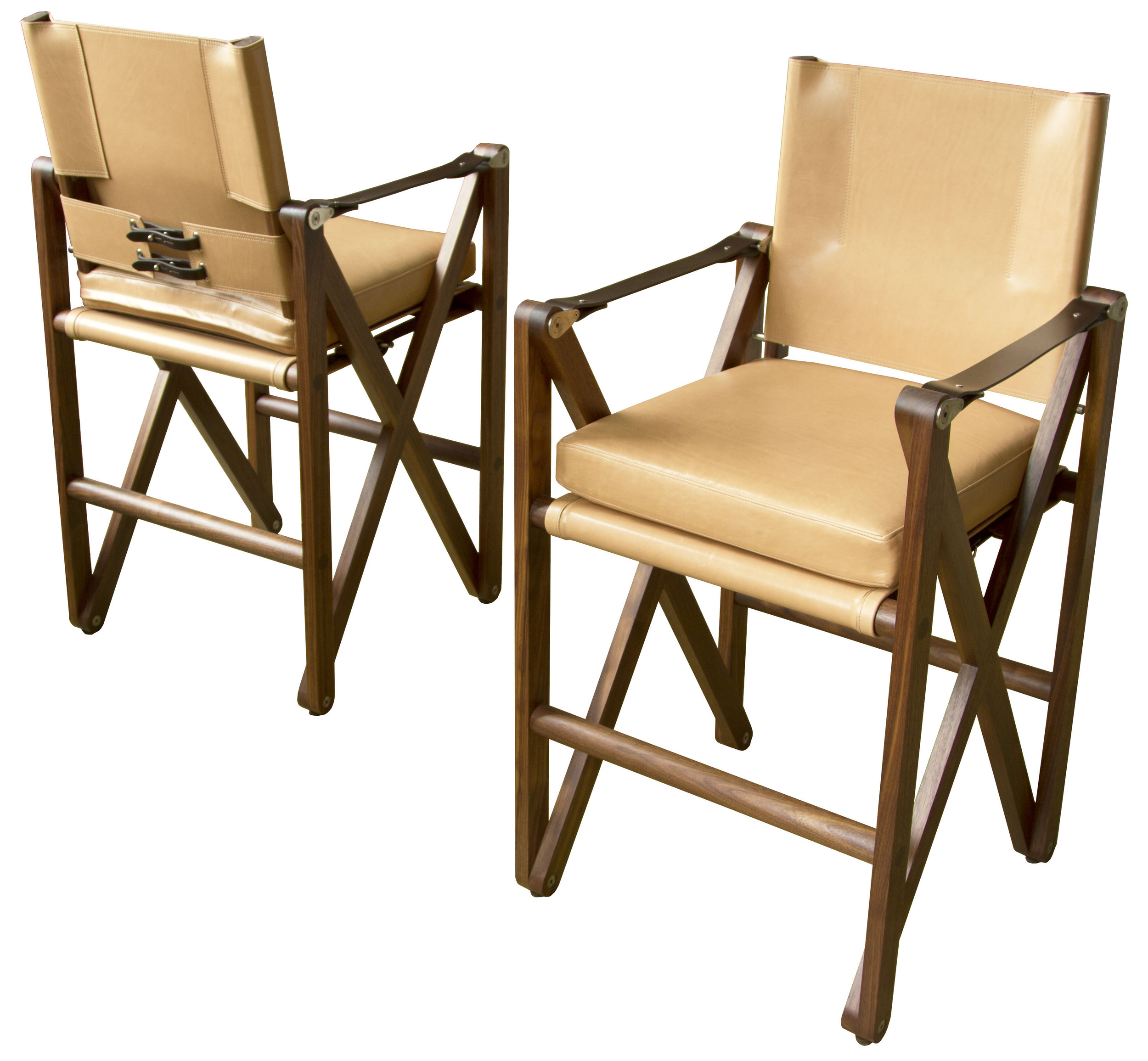
The MacLaren began as a bar chair, and began with a brief that was admirably plain: a chair generous enough for pot-bellied men. Not a stool — a stool tucks under a counter and disappears — but a chair, with a back to lean against and arms to settle into, that would occupy the kitchen as furniture.
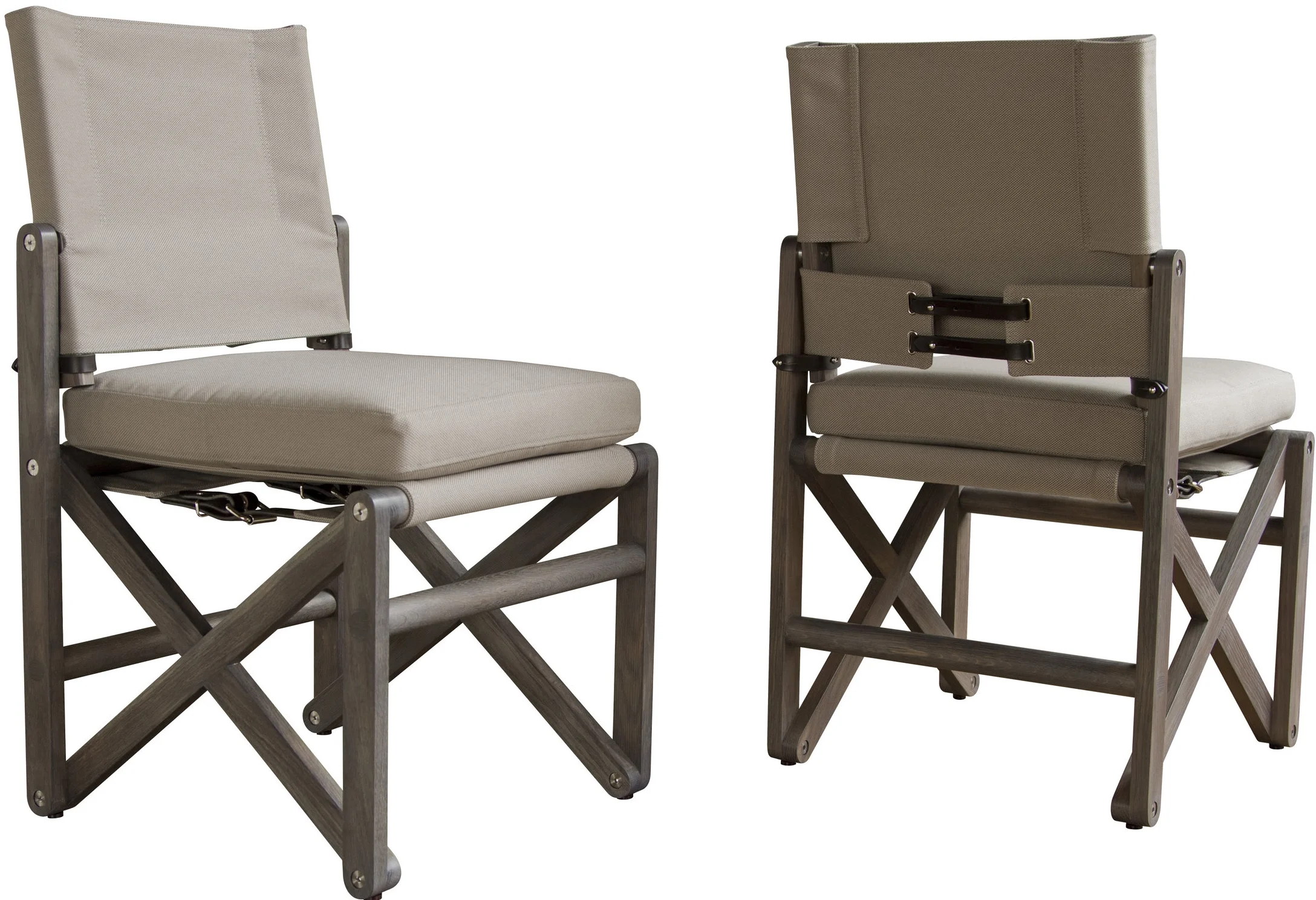
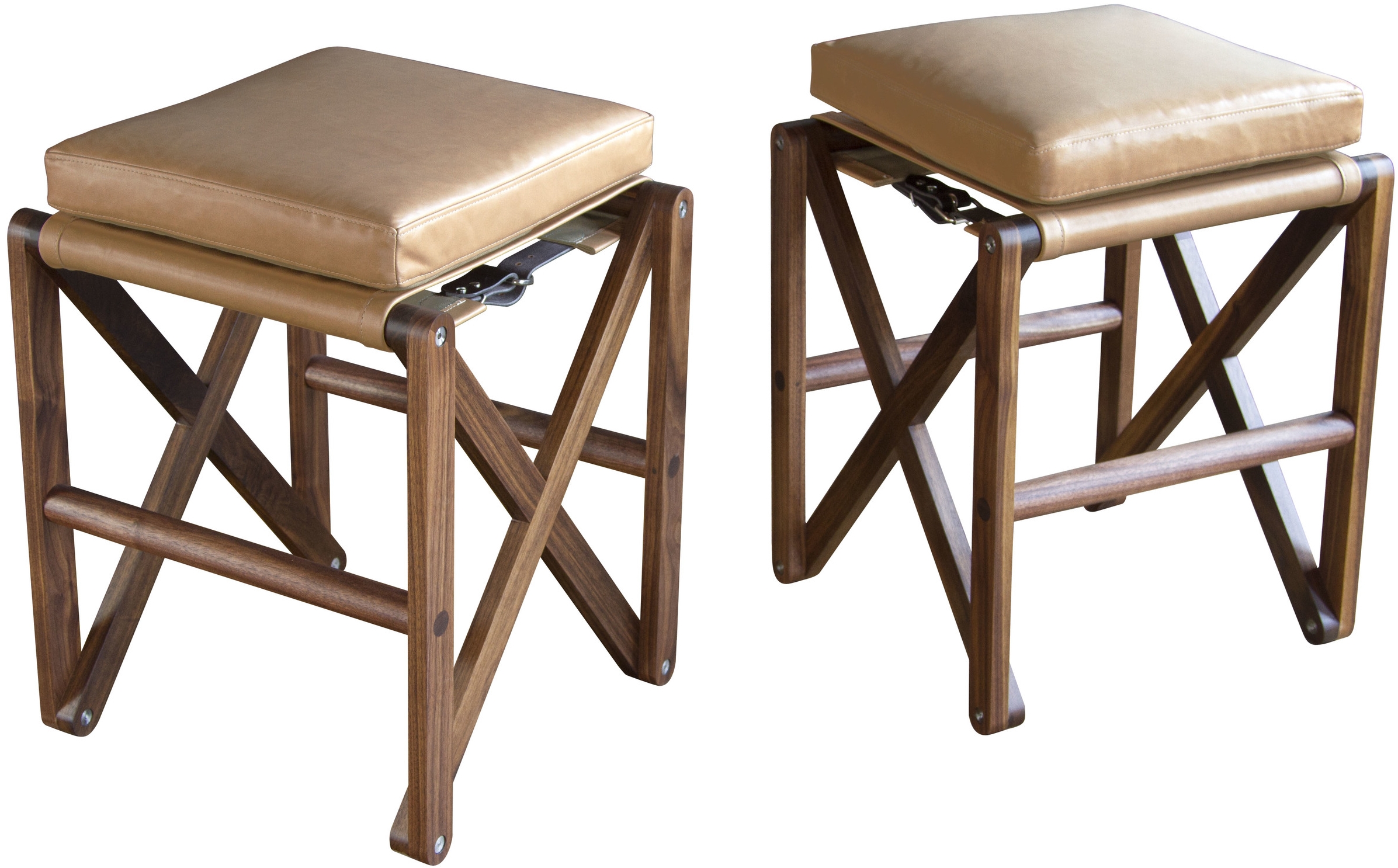
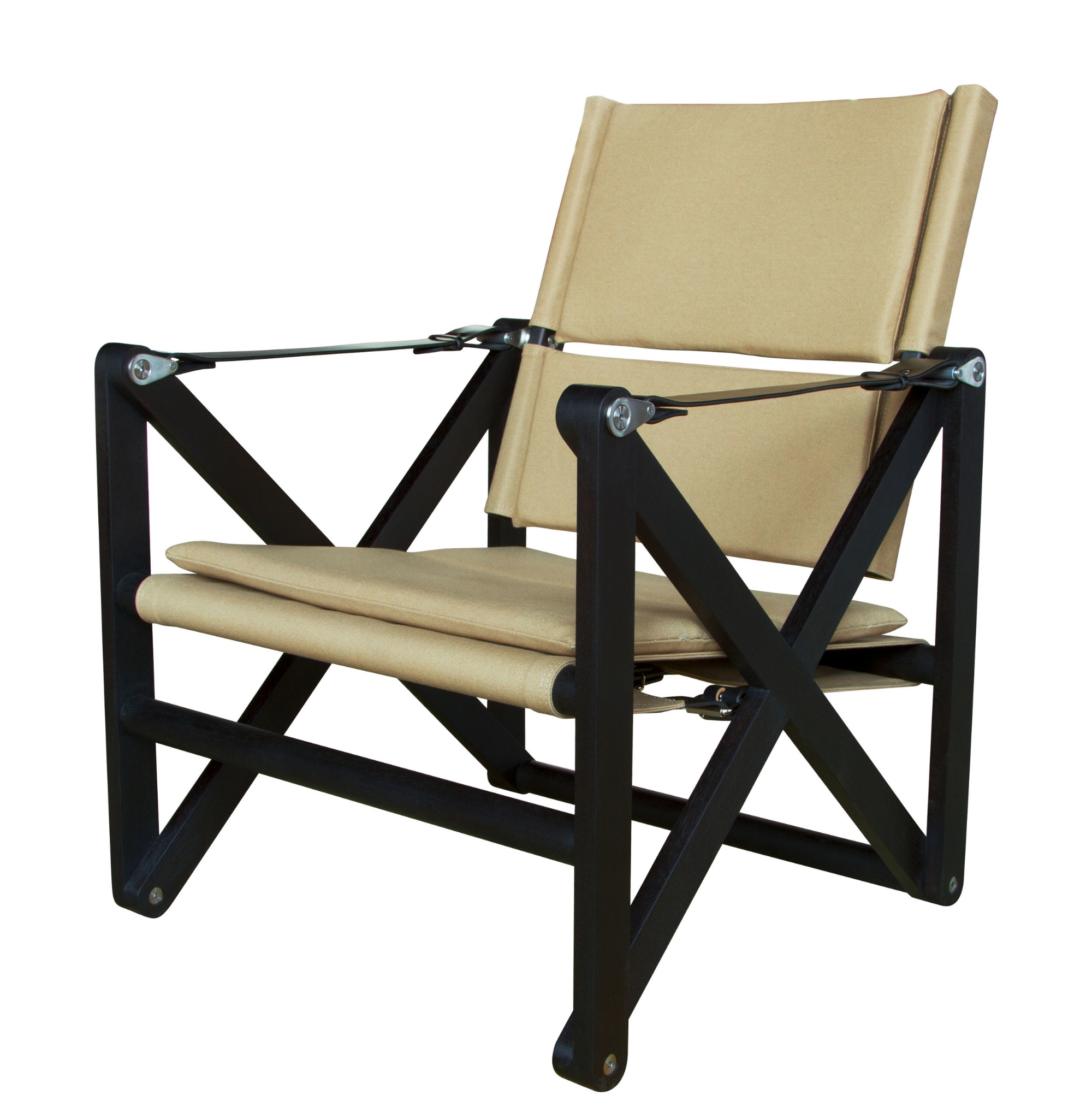
What followed is what tends to follow when a frame turns out to be honest. The bar chair came down to counter height, then to dining. The arms came off for the sides of a long table, where a run of matching chairs wants a quieter line. The back came off as well, and the stool arrived. And at last the whole geometry sat down and became a lounge chair, small enough for the corner of a study or the foot of a bed.
Each of them reads as though it might fold. None of them does. The crossing legs and the leather at seat and arm are the visual language of the campaign tradition, borrowed for its economy — the X of the leg, the leather where wood would otherwise be — but the joints are fixed and braced for the long life of furniture that gets sat in every day. What the design keeps is the suggestion of a piece that could, in some other life, be packed away. It simply elects not to.
The cushion rests throughout on a sling of leather or fabric tightened with leather belts, and the arm straps are English bridle rather than wood — hand-cut, hand-stitched, and certain to deepen with use the way a good belt does. Six pieces, one frame, made to order in 26 woods and over 200 leathers.